



Despite being half a world apart, the Dominican Republic fears a U.S. attack against Iraq could unleash serious difficulties amid a complex social and economic situation the island nation is going through.
In Dominican president Hipolito Mejias’ opinion, “a war against Iraq is a fact and the country must brace itself to cushion its effects, especially in such basic sectors for the economy as tourism and free trade zones.”
Three of Europe’s largest hotel companies –Accor, Six Continents and Hilton International- agreed to form WorldRes Europe, a new joint venture aimed at marketing and selling its hotels all across the Old World. The European Commission is currently reviewing the agreement for its final passage.
At least 52 sectors within the Brazilian economy benefited from Rio’s Carnival, the nation’s Ministry of Tourism reported. The celebrations generated great revenues thanks to tourism and prompted the creation of new jobs.
Earnings rose to $138.5 million after the city shelled out $7 million in parade preparations for the Special Group’s 14 samba schools.
Moreover, the Independent Samba School League (LIESA) amassed half of those revenues out of tickets sold for the so-called Sambadome for $6.5 million.
The Galaxy Travel Distribution System (TDS) will mesh together all retailing travel agencies in one world network of receptive agents for a wide range of ground services at very competitive fares.
What would an Iraqi war cost the airline industry?
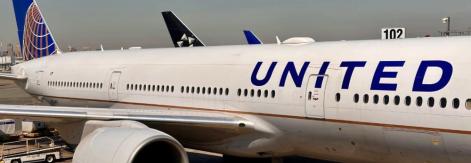
Likely several billion dollars in financial losses, and tens of thousands of jobs. Or maybe United Airlines. Or the chance to successfully restructure the industry.
Should U.S. bombs start falling on Baghdad, the devastation will be swift and severe at U.S. airlines. If terrorism fears rise as fast as oil prices, and security hassles grow as international flying shrinks, then this war is likely to have several, if not many, airline
casualties.
Jose Javier Rivera, chairman of the Panamanian Chamber of Commerce, Industries and Agriculture, voiced interest in having Puerto Rican companies vie for infrastructure project contracts in this Central American country, including the tourist sector.
Mr. Rivera said that Puerto Rico’s companies –in a joint effort with their Panamanian counterparts- could work on an array of projects such as the expansion of the Panama Canal, road building and other infrastructure programs.