
Leisure Space Tourism Market Projected to Reach $3.49 Billion by 2030
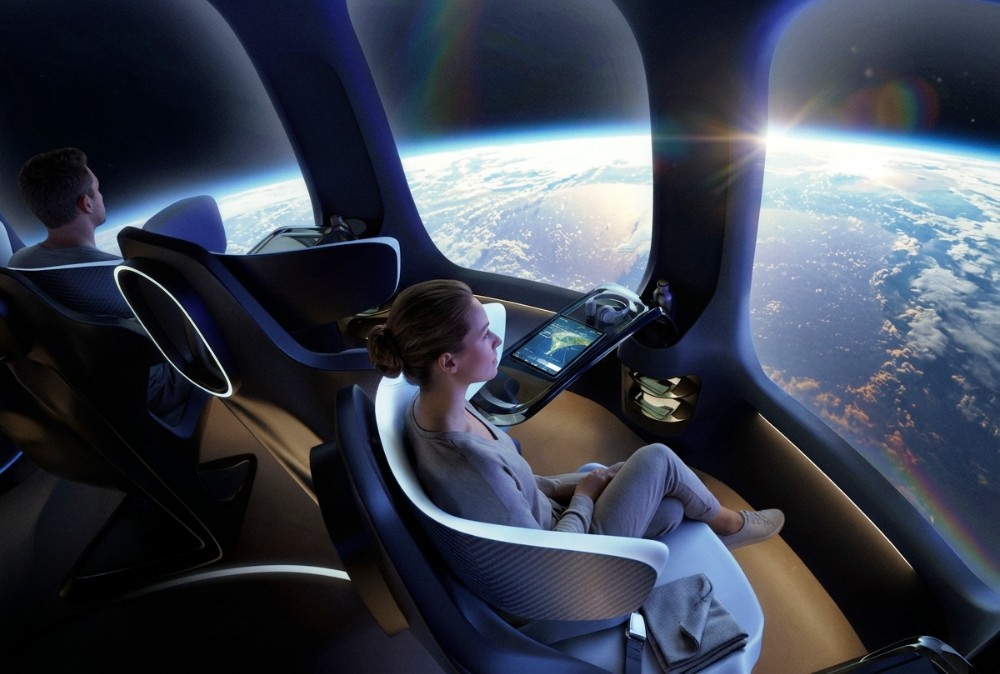
Driven by Private Aerospace Investment and Reusable Launch Systems, the Ultra-Luxury Sector Is Forecast to Double Its Value at an 18.7% Compound Annual Growth Rate
The global leisure space tourism market is undergoing rapid commercial expansion and is projected to reach an estimated valuation of $3.49 billion by 2030, advancing at a compound annual growth rate (CAGR) of 18.7%, according to a new market analysis published in London by The Business Research Company.
Unlike government-led or scientific expeditions, this specialized sector encompasses commercial spaceflight conducted by private individuals strictly for recreational and adventure purposes beyond Earth's atmosphere.
Short-term financial data outlined in the study underscores a sustained upward trajectory, rising from a market valuation of $1.48 billion in 2025 to a projected $1.76 billion in 2026, representing a year-over-year expansion of 19.1%. Industry analysts attribute this momentum to growing public fascination with suborbital flights, widespread media coverage of civilian space missions, and surging appetite for ultra-luxury experiential travel.
Looking toward the end of the decade, the near-doubling of the sector's commercial volume will be underpinned by the rollout of orbital and lunar tourism packages, rising disposable income among ultra-high-net-worth travelers, and the broader commercialization of private space transportation services. Key emerging consumer trends identified in the report include demand for customized spaceflight itineraries, extended mission durations, and growing civilian participation in private expeditions venturing beyond low Earth orbit.
A primary catalyst fueling this market acceleration is the massive influx of private capital from aerospace pioneers and technology firms dedicated to designing next-generation spacecraft, reusable launch systems, and dedicated passenger infrastructure.
Illustrating the sector's broader financial vitality, a separate report from the European Space Policy Institute (ESPI) published in May 2026 noted that defense and security-oriented enterprises accounted for 30% of total investments in European space ventures during 2025, with 84% of participating investors domiciled within the continent.
From a regional standpoint, North America solidified its position in 2025 as the dominant market leader in recreational space tourism share. However, market forecasts indicate that the Asia-Pacific region will record the fastest pace of expansion throughout the projection period, alongside steady commercial development across Western and Eastern Europe, South America, the Middle East, and Africa.
These geographical and technological shifts demonstrate how commercial spaceflight is steadily transitioning from an experimental frontier into a structured pillar of the global ultra-luxury hospitality landscape. As launch cadences increase and spacecraft engineering matures, private space operators continue to broaden access to off-world travel for a new generation of affluent explorers.