The Ongoing Challenge of Sargassum in the Mexican Caribbean
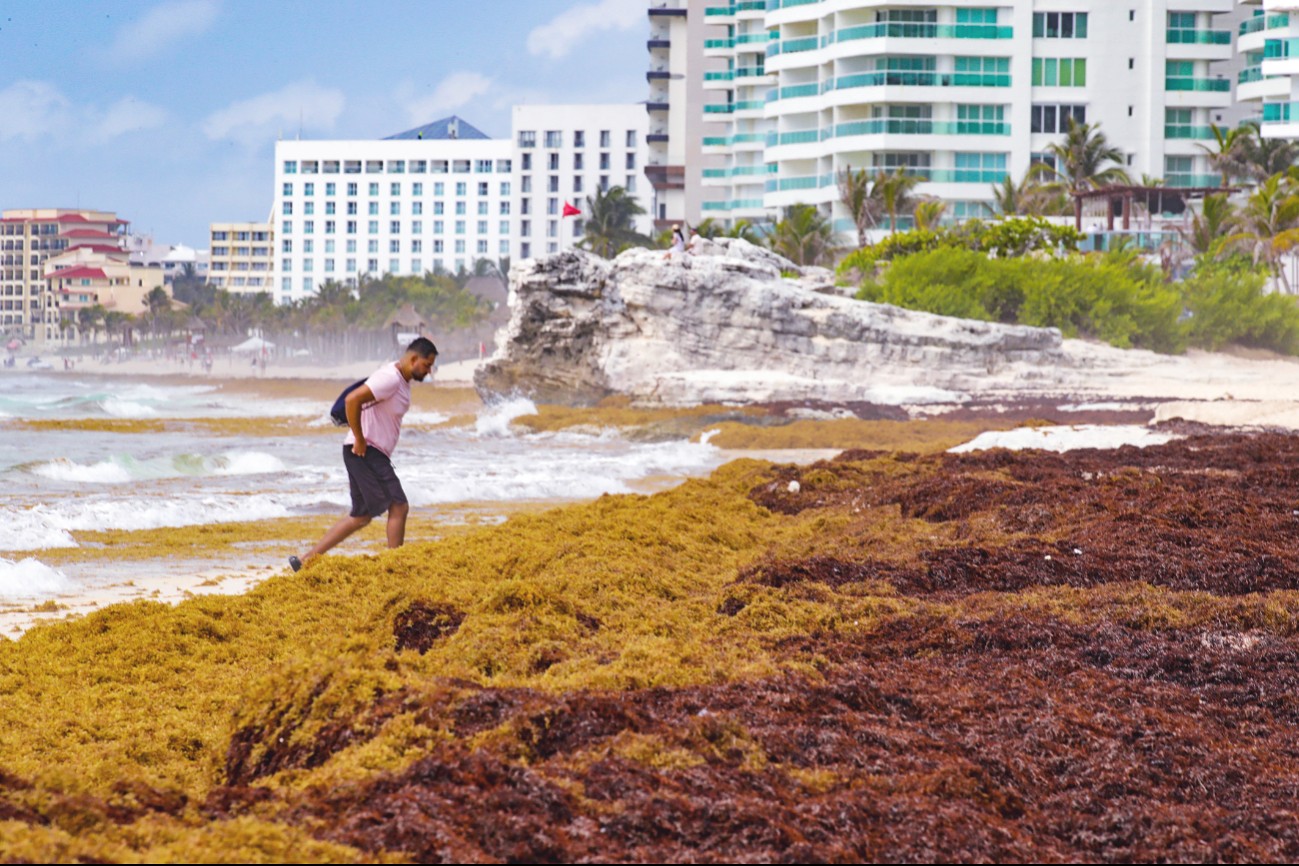
The Mexican Caribbean, renowned for its pristine turquoise waters and world-class tourist destinations like the Riviera Maya and Cancún, has faced an environmental management dilemma since late 2014.
Massive, atypical influxes of holopelagic Sargassum—a type of free-floating brown macroalgae—have caused recurring "golden tides" that disrupt local ecosystems, impede tourism, and challenge institutional governance.
These algal blooms are primarily composed of Sargassum natans and S. fluitans, which drift in from the Great Atlantic Sargasso Belt. While historically confined to the Sargasso Sea, these massive rafts now proliferate in the tropical Atlantic, fueled by rising sea temperatures and increased nutrient inputs. When these masses reach the coast of Quintana Roo, they often accumulate in depths reaching several meters, creating a significant logistical and financial burden for state and federal authorities.
The environmental consequences of these arrivals are severe. As the Sargassum decays on the shore, it releases toxic gases such as hydrogen sulfide and ammonia, creating an unpleasant odor and posing potential health risks to coastal communities. Furthermore, the rotting seaweed generates leachates and particulate organic matter, leading to a phenomenon known as "Sargassum brown tide." This process depletes oxygen levels in the water and blocks sunlight, which can lead to the mortality of nearshore benthic flora and fauna, including sensitive seagrass meadows and coral reefs.
Managing these events requires a delicate balance between immediate mitigation and long-term sustainability. Current response efforts often rely on manual or mechanical removal from beaches, as well as the use of offshore containment barriers designed to intercept the algae before it reaches the sand.
However, these efforts are often reactive, costly, and sometimes insufficient, leading to secondary issues like beach erosion, sand compaction, and interference with marine turtle nesting grounds. Additionally, improper disposal of collected seaweed in mangroves or forests can lead to the contamination of local underground aquifers, which serve as the primary source of freshwater in the region.
To address these recurring crises, scientists and policymakers are increasingly looking toward integrated strategies that combine technological innovation with robust public policy. Improved satellite remote sensing and ocean circulation modeling are now critical for short-term forecasting, allowing authorities to predict landing sites and optimize cleaning efforts.
Beyond mere removal, there is growing interest in developing a circular economy around the algae, exploring its potential as a raw material for local industries. As the frequency and intensity of these blooms show little sign of abating, the region continues to experiment with ecological reflexivity to better manage the interplay between human economic interests and the health of the fragile coastal environment.