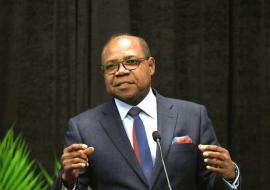
Q & A with Vincent Vanderpool-Wallace, Bahamas’ Minister of Tourism and Aviation
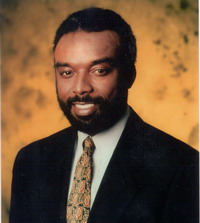
Q & A with Vincent Vanderpool-Wallace
Bahamas’ Minister of Tourism and Aviation
by Jose Carlos de Santiago
WTM 2010 - London
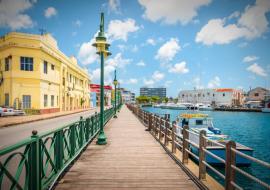
Made up of over 700 isles covering more than 1,000 kilometers from the southeast of Florida to the eastern side of Cuba, the Bahamas are one of the most sought-after Caribbean destinations. One of the challenges faced up by its tourism sector, mainly aimed at the high-end segment, is securing airlift among the islands. Mr. Vanderpool-Wallace talked with Caribbean News Digital about some actions to be implemented and new projects in the offing.
How hard has the ongoing world economic recession hit the Bahamas travel industry?
The world economic situation has affected the Bahamas just as it has done with other tourism destinations. But I can say that we’ve grown 4-5 percent during 2010 as compared with 2009, and cruise business is gaining momentum with an 11 percent increase. Despite the crisis, we didn’t lower the prices of our rooms, as some other destinations did. We even raised the average price by 10 percent. Our prices are high and we maintain a flow of high-end tourists visiting the Bahamas who are willing to pay even more. So we had, I guess, the lowest rate of discounts in the regional tourism market. Therefore, this year has been better than last year in terms of numbers and tourists visiting our hotels, air traffic and cruise arrivals.
What are the Bahamas’ main outbound markets?
The U.S. is the most important one, with 80 percent of the total tourism share, followed by Canada and the U.K.
How about Asia or Russia?
They have low profiles so far. However, we’ve already hired a company to represent us in emerging markets from Europe and Russia.
The merger of Iberia, British Airlines and American Airlines, could it improve air traffic from Europe to the Bahamas, especially from Spain?
Yes, it could. One of our offers is that the Bahamas count on more isles than the rest of the Caribbean, more beaches and more territorial waters. Most of the people can only visit Nassau. What we’re trying to facilitate is the access to other Bahaman islands: we’ve laid out a campaign which allows customers arriving in Nassau to fly for free to other isles. We believe this will open other isles of the archipelago and it’ll give the tourism markets and tourists a better idea of what we have to offer: we count on 283 hotels with license in the Bahamas, and 199 of them are based on other isles beyond Nassau and Paradise Island. I mean, we have a lot to sell, and the best way of selling it is by having tourists fly to those islands and we’re working on it. I think the merger of these airlines will help us to attract more tourists.
What’s the status of Spanish investment in the Bahamas?
We don’t have much Spanish investment in the Bahamas. We have RIU, with a significant investment. We’d like to see more investors coming from that European country. The Bahamas is not an all-inclusive destination, we don’t want it to be so; we want people to come and enjoy our hotels, but visit several islands. We’re interested in investment for upscale hotels, but not the all-inclusive system. We’ve succeeded in convincing tourists who visit the Bahamas to pay more per night here than in other destinations. According to a study carried out by UN on Spanish tourism in the Bahamas, this is the most expensive destination in the Caribbean and the Americas. And so it’ll be.
Is there any investment project in the near future that includes Spanish investors?
Not necessarily investors from Spain, but from other countries. There are, for instance, residential projects since we’re not only looking for hotels, but tourists who want to rent villas as well. This is a very important segment for us. We’ll be promoting the Bahamas, even more than in previous years, not precisely promoting hotels, but different types of accommodations: we want to receive more tourists in the Bahamas and we’ll provide high-quality accommodation options.
What do you think about the Caribbean and the new projects in CTO and CHTA?
First of all, I’d like to congratulate the new chairman of the Caribbean Hotel and Tourism Association (CHTA), who we know is very interested in joining the efforts of CTO and CHTA, to gather resources and strongly promote the Caribbean. It’s all about achieving a better cooperation between the private sector and governments, as well as combining resources and funds, which we’ve debated and I think we will see some good steps in that direction.
In fact, I want to highlight that everything we’re doing in the Bahamas to connect the islands, develop systems of online booking, our promotion actions; it has all been debated with the CTO and we’ve said to the chairman that our experience is available for the Caribbean, where many destinations are facing the same problems we’re solving in the Bahamas.
Will the Bahamas attend FITUR in Madrid in 2011?
We’re recommending it. We believe we have a very important message for those markets: people should see the variety of our tourism product and be aware of that, after they arrive in from Europe, they can fly for free to other islands. It’s a tempting message.