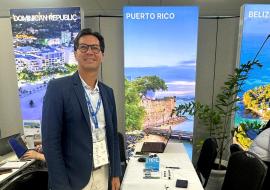
Salvatore Avaro. Alitalia General Manager for the Iberian Peninsula


Q: What’s your assessment of the Spanish market and its chances, not only of the Spain-Italy passenger flow, but also of the Italy-Spain flow?
A: When I came to Spain roughly two years ago, I found an expanding market in full swing, at least as far as communications between Spain and Italy was concerned. To paint a much clearer picture about the traffic from Spain to Italy, let me tell you that Alitalia holds 33 to 34 percent, plus 90 percent of the Italian market. Of course, around 80 percent of the total traffic originated in Spain belongs to low fares, just what we call “vacation travel.”
Q: How do you establish your sales policy?
A: Our sales policy is inserted in two well-differentiated frameworks. On the one hand, it’s all about the vacation framework, with business travel on the other hand. We pay special heed to business travel. We always try to step up this kind of trip by offering better services, by implementing marketing strategies, promotional actions, by doing market analysis and weighing what its chances really are.
Q: Can you tell us about some of these marketing strategies?
A: In this respect, we’ve got an initiative or promotion called Planning Card, specially aimed at Pymes with 25 to 50 percent discounts off business class fares.
Q: What are those destinations Planning Card customers can benefit from?
A: Mainly Rome, Turin, Germany, Milan and Bologna.
Q: How can you enroll in it?
A: There’re different ways to get it, either through a travel agency, on the Internet or just by dialing our Call Center. We’ve poured a lot of money in to promote this new initiative, even though it’s a pretty easy process. A customer calls and gets a temporary card number. From that moment on, he can benefit from the advantages this project has to offer. Besides, Planning Card provides customers with an array of prerogatives such as changing round-trip ticket only once and without any penalties, you know, a discount off the ticket’s face value done seven days before flight date. Now you don’t need to do any booking 21 days in advance, as it happens in many other cases.
Q: You’ve got a Web site, www.alitalia.es. What online services are you offering right now and what improvements are you weighing?
A: Well, this Web site gives you all the information you need about our company, everything the customer wants to know. I’m talking about flights, timetables, destinations, fares, press releases and news linked to the sector, especially promotions, flight discounts, and the like. We’re even considering the possibility of hiring employees directly through the Internet. As we speak, we’re working hard to provide a much better service and add new proposals for our online clientele.
Q: Have you devised any way of selling plane tickets through your Web site?
A: No, we believe this is just another service the company offers, like the Call Center or the bookings you make in our offices. It’s another sales channel to distribute the product.
Q: How do you assess the future of travel agencies?
A: I think they should act as advisors to the end user in which they should pay customers a commission and in which final fares for professionals won’t be subjected to further discounts. I also believe the commission should be paid to travel agents through the good service they provide customers with at the best price they could possibly get. This innovation is now a fact in many countries like Italy, Germany and the U.S.
Q: What can you tell us about the volume of passengers and its evolution?
A: Until September 2001, the year fared pretty well for the company. Our traffic started growing since February 2002. We grew 3 percent in the first half of the year compared to the year before, and we’re gunning for a 5 percent growth by the end of the year with over 700,000 passengers and one major achievement in the bag: start Alitalia’s financial overhaul plan twelve months in advance to the scheduled date we’d set for 2003.