
The Seaweed Invasion Continues in Florida, Mexico
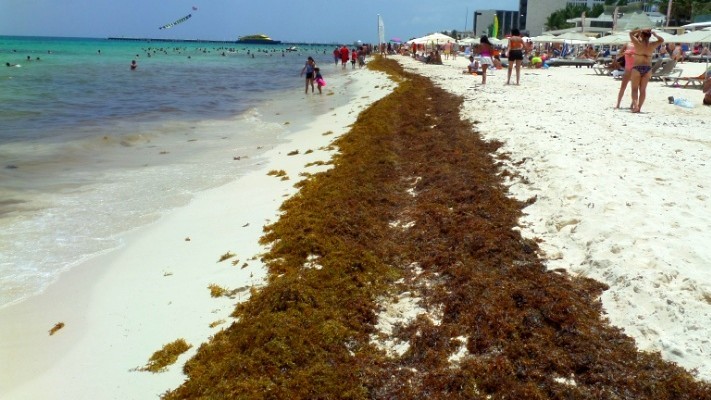
Instead of seeing white sandy beaches, since July, vacationers in Miami and Cancun are instead walking onto beaches covered in Sargassum seaweed.
After plaguing parts of the Caribbean, the floating rafts of seaweed are moving along ocean currents in the Gulf of Mexico.
Unprecedented quantities of Sargassum began washing ashore along the Caribbean and Gulf of Mexico in 2011, but recently there has been a lot more of it washing up.
More than 1,000 square miles of seaweed have been detected in satellite photos of the Caribbean, three times larger than the 2015 record, according to scientists at the University of South Florida’s Optical Oceanography Laboratory.
Seaweed in such large quantities can have detrimental impacts on tourism, fisheries and wildlife, and could pose a long-term threat.
Too much can cause “dead zones” in the water, where there is not enough oxygen for other organisms to survive; or produce hydrogen sulfide gas, which gives the beach a rotten egg smell, which is a main complaint of beachgoers.
Along Mexico’s Caribbean coast, seaweed has been impacting beaches in tourist destinations such as Cancun, Puerto Morelos, Playa del Carmen, Cozumel, and Tulum.
Mexican officials are attempting to control the influx by placing almost 17 miles of seaweed barriers along the beaches near Playa del Carmen. In South Florida, cities are disposing of it, composting it or mixing it with beach sand.
Source: Travel Market Report