



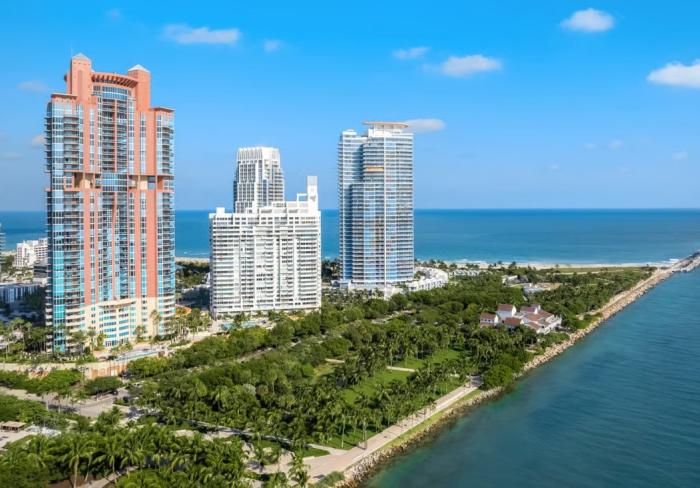



Investment in Chile’s real estate business linked to the leisure industry was down 10.8 percent last year and the biggest chunk of projects in that span of time is “still under scrutiny,” local entrepreneurs said.
The Research Department of the National Chamber of Commerce, Services and Tourism (CNC) and the Higher Council of Tourism (CONSETUR) disclosed the outcomes of the real estate sector for 2003 in their annual joint report.
The regional airline LIAT needs an estimated EC$17 million (US$6.2 million) to keep it airborne until it came be merged with Trinidad and Tobago´s national carrier, BWIA on July 1, according to St. Vincent and the Grenadines Prime Minister Dr. Ralph Gonsalves.
Dr. Gonsalves on Friday held discussions with Prime Minister Patrick Manning on the issue and afterwards told reporters that, operationally, LIAT will have a shortfall of EC$3.5 million (US$1.2 million) over the next six months.
In addition to being one of the world’s top travel destinations, Mexico has opened the front doors even wider in an effort to lure the increasingly important segment of congresses and conventions by knocking down taxes levied on added value. The move is said to general more businesses, create more jobs and prod development forward.
P.R.O.F.I.T. in the Caribbean (acronym for Partnership Roles & Opportunities For Investors in Tourism) is a luring initiative devised by ProInvest and sponsored by the European Union that counts on the support of the Caribbean Hotel Association (CHA).
The fifteen member states of the Caribbean Community (CARICOM) will sign a free trade agreement with Costa Rica after negotiating efforts that stretched throughout most of 2002. The signing ceremony will take place as Costa Rican President Abel Pacheco and Jamaica’s Prime Minister Percival J. Patterson meet next March 9.
The Caribbean Community is Costa Rica’s fourth-largest trade partner with $69.8 million worth of exports and $16.7 million in imports in 2003.
Mexico’s tourism sector set a new record high in 2003 with $9.5 billion worth of revenues, up a 6.8 percent hike from the year before, the country’s Tourism Secretary Rodolfo Elizondo pointed out.
With these figures in the bag, Mexico jumped from number 13 to the tenth spot among the world’s biggest foreign tourist receivers, Mr. Elizondo went on to explain.
The high-ranking Mexican official also noted the country held on tight to the number eight spot in international arrivals with 18.6 million vacationers.