Mexico Rejects Royal Caribbean’s Proposed Perfect Day Mega-Resort, Citing Environmental Risks
The Mexican government has officially rejected Royal Caribbean Group's ambitious proposal to construct Perfect Day Mexico, a massive 200-acre private resort destination slated for the country's Caribbean coast. Environmental authorities shot down the project following intense pushback from local communities and ecological advocates who warned of irreversible damage to the region's delicate marine ecosystems.
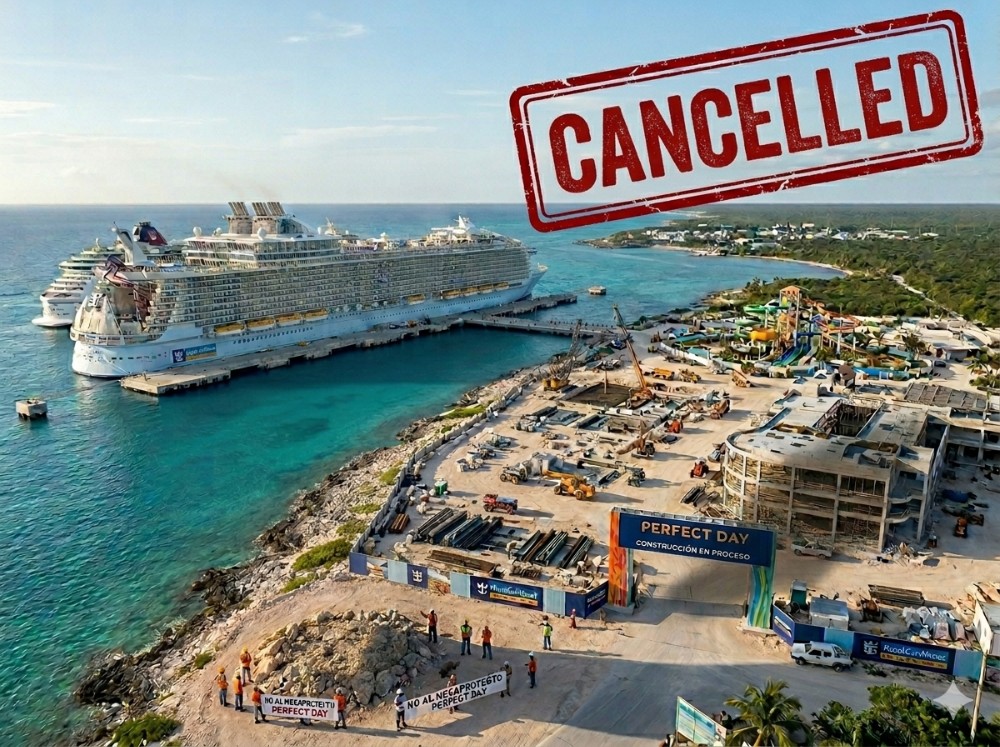
The image above highlights the scale of the proposed Loco Waterpark, which was designed to anchor the development with a 170-foot waterslide tower known as Jaguar's Peak, along with an extensive network of artificial pools and manicured beaches. While Royal Caribbean pitched the project as an economic engine that would integrate local culture and upgrade existing infrastructure, regulatory agencies determined that the sheer footprint of the park posed too great a risk to the surrounding environment.
The Ministry of Environment and Natural Resources, known locally as Semarnat, confirmed the finality of the decision during a recent press conference. Environment Secretary Alicia Bárcena Ibarra stated unequivocally that the agency would not grant the necessary environmental viability permits required for construction to move forward.
Mexican President Claudia Sheinbaum Pardo echoed those conservation priorities during a daily press briefing, emphasizing that the government refuses to compromise the ecological balance of the vulnerable coastline. Government officials expressed particular concern for the nearby Banco Chinchorro Biosphere Reserve and the Mesoamerican Reef, which stands as the second-largest barrier reef system in the world.
The mega-resort was planned for the small coastal village of Mahahual in the southern part of Quintana Roo. Environmental impact assessments indicated that the area is home to approximately 50 hectares of protected mangroves and coastal wetlands. Grassroots opposition mounted quickly as local divemasters, residents, and organizations like Greenpeace launched petitions highlighting the threat of staggering freshwater consumption, massive plastic waste generation, and chemical pollution from thousands of daily tourists.
The cruise line had aimed to use the private destination to nearly double its regional traffic, accelerating annual visitor numbers from 2 million to over 4 million by 2030. Following the formal rejection, Royal Caribbean issued a statement expressing disappointment but affirming its respect for the authority of Mexico's environmental agencies. The company noted that it remains optimistic about future investments in the country and plans to re-engage with local stakeholders to explore alternative, ecologically responsible development paths.