America’s Big Three Airlines Brace for the Very Worst
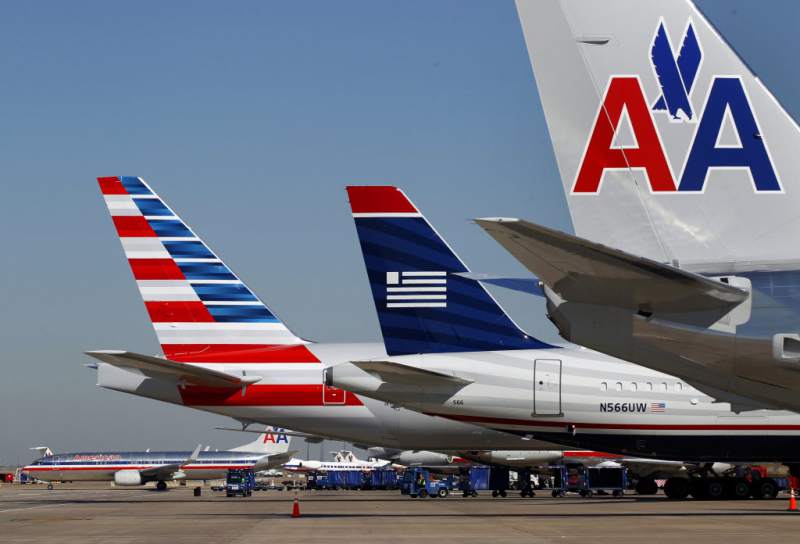
U.S.-based airlines cope with a bleak future of depressed traffic and volatile revenue well into 2021.
According to an analysis published by Bloomberg, the journey promises to get worse this fall when billions of dollars in government assistance comes to an end. Several carriers, including Delta Air Lines Inc. and United Airlines Holdings Inc., have begun openly contemplating how they will shrink operations, while American Airlines Group Inc. is moving to shed more of its older planes.
By one analyst’s count, as many as 105,000 jobs could be lost industrywide.
Airlines are barred from slashing jobs through Sept. 30 under the terms of a $50 billion government bailout, but they’re already warning employees that cuts are almost inevitable.
The planned contraction reflects a widespread belief that 2020 revenues could shrink to levels not seen in years. Recovery will probably be a long-term affair, said Cowen & Co., which predicted that ticket sales may not rebound to pre-pandemic levels until 2025, the Bloomberg report goes on.
Unable to cut jobs or salaries while receiving grants to cover payroll, airlines will staff their typical summer peak largely as usual, even with millions of fewer travelers. But come fall, it could get ugly for employees.
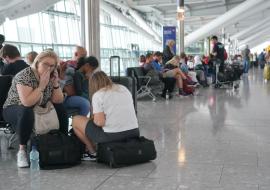
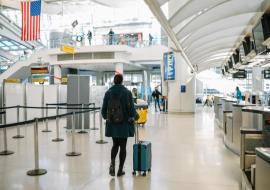
The reversal of fortune comes as a shock for an industry that just last year was breaking passenger traffic records. Last week, the average number of U.S. daily passengers declined 96%, to 95,531, compared with 2.39 million last year, according to Transportation Security Administration data compiled by Bloomberg.
Also Read:
Airlines Worldwide Brace for the Very Worst amid Coronavirus
Over 13,000 American Airlines Employees Opt for Voluntary Leave, Early Retirement
U.S. Airlines Nab $25 Billion in Payroll Support from Relief Package
United shares fell Monday after it gave a snapshot of the industry bloodbath triggered by the pandemic, projecting a $2.1 billion loss in the first quarter. Delta, American and Southwest Airlines Co. will release their earnings in the coming days.
Such anemic demand means that anything less than a robust rebound over the coming months will prompt airlines to cut more employees, jettison older aircraft and cut more salaries, which in turn could persuade more workers to depart. During the past two months, at least 87,000 employees—more than one quarter of the Big Three airlines’ workforce—have taken voluntary leaves, early retirement or reduced work hours.
Carriers face “the worst cash crisis in the history of flight,” with booked revenues down 103% year over year, according to industry lobby Airlines for America. Domestic flights are averaging just 10 passengers while international flights average 24, the group said.
Southwest told union leaders it might slash some of its 60,000 workers this fall if a deal can’t be reached to cut labor costs further and traffic doesn’t return to more normal patterns. Any furloughs would be the first in Southwest’s 49-year history.
The government bailout bought employees and labor unions time to devise methods to lessen financial hardship, including bridges to early retirement and other separation programs, said Sara Nelson, president of the Association of Flight Attendants-CWA, which represents almost 50,000 attendants at 19 airlines, including United and Alaska Air Group Inc.
The union and its allies are also pushing Congress to amend the bailout legislation so that a dozen large airlines can keep about $6 billion the U.S. Treasury is currently expecting to be repaid.
Airlines like Delta and United are built atop global networks oiled by revenue-sharing alliances. Funneling corporate travelers through domestic feeder routes that can connect a New Hampshire hamlet with a Chinese manufacturing hub is where the money is. Removing those high-value passengers from the equation is akin to tossing sand in the gears—it forces carriers to quickly cut costs to make up the lost revenue.
While airlines foresee an uptick in bargain-hunting leisure travelers this summer, big money road warriors will take longer to win back. Corporations will be reluctant to assume the liability of putting employees back in the sky with Covid-19 still in wide circulation. Plus, many companies have learned to function via video conference—which is a lot cheaper than a business class seat.
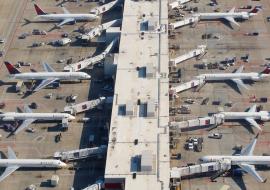
The airline industry generally has taken three to four years to fully recover from major disruptions, said Samuel Engel, head of the aviation group at consultant ICF. Economic downturns often accelerate trends that were already underway, like pulling down marginal routes and, more recently, the decline in demand for large aircraft, he said.
Delta is evaluating whether to speed the retirement of its oldest Boeing MD80 and MD90 aircraft, while United has said its oldest Boeing 757s and some 767s could also be grounded permanently, ahead of schedule.