FIFA President Faces Backlash Over Massive Private Jet Emissions During 2026 World Cup
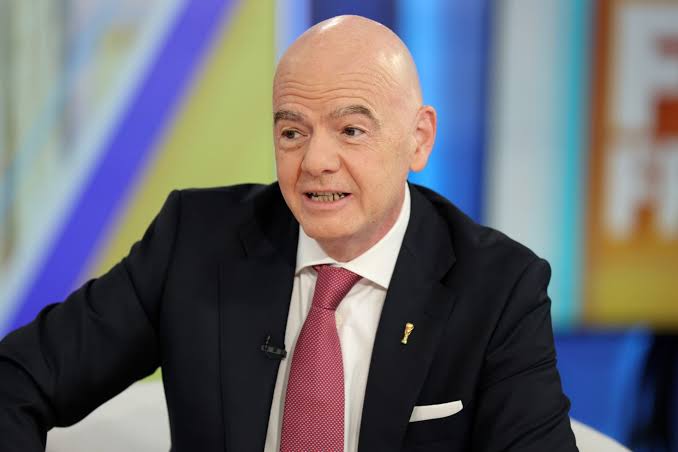
FIFA President Gianni Infantino is currently at the center of a mounting environmental scandal following revelations regarding his extensive use of private aviation throughout the 2026 Men’s World Cup.
Investigations conducted by BBC Sport and BBC Verify have tracked the president’s movements across the North American tournament landscape, uncovering a travel itinerary that climate advocacy groups argue completely undermines the governing body’s stated sustainability commitments and long-term net-zero goals.
Data analysis indicates that between the tournament's kickoff and June 27, the president's Gulfstream G650ER private jet traveled at least 50,122 kilometers, clocking over 66 hours of total airtime. Based on a conservative fuel burn rate of approximately 1,817 liters per hour, these specific journeys are estimated to have emitted roughly 516 tonnes of carbon dioxide-equivalent (CO2e). This volume of emissions is mathematically equivalent to the total annual carbon footprint of approximately 78 average citizens, sparking sharp condemnation from environmental watchdogs and climate policy experts.
Tournament Logistics and Climate Impact Discrepancies
The 2026 tournament, hosted jointly across Mexico, Canada, and the United States, represents a massive expansion of the traditional World Cup footprint. Despite official FIFA strategic planning that emphasizes regional team hosting to minimize long-distance transit, the vast geographical scale of the continent has inevitably forced both participating teams and the international press corps into significantly higher levels of air travel than previous iterations.
A 2025 assessment released by Scientists for Global Responsibility (SGR) suggests that the overall carbon footprint of the 2026 event could reach a staggering nine million tonnes of CO2e. This figure, if confirmed, would represent a doubling of the average footprint recorded during the previous four tournament cycles, officially positioning this year’s competition as the most environmentally damaging in the history of the sport.
Contradictory Stances and Growing Calls for Accountability
FIFA’s official 2026 World Cup sustainability and human rights strategy explicitly commits the federation to aggressive emission reduction targets, including a promise to cut total output by 50% and achieve net-zero status before the year 2040. Critics contend that the president’s routine of traveling upwards of 4,000 kilometers in a single day—such as a high-profile June 15 itinerary spanning Miami, Seattle, and Los Angeles—stands in stark contradiction to these institutional pledges.
While a FIFA spokesperson defended the high-frequency travel as a necessary component of the president's routine duties to attend matches and meet with visiting dignitaries, the reputational fallout is compounding other existing controversies. Recent reports linking Infantino to political interventions regarding player disciplinary actions—specifically the lifting of a red card ban for U.S. player Flo Balogun following alleged pressure from President Donald Trump—have further eroded trust among international stakeholders. As public scrutiny intensifies, a growing chorus of fans and industry observers are openly calling for a fundamental reassessment of FIFA’s leadership and its actual commitment to the global climate transition.