Sargassum Season" Hits Mexico Early, Prompting Coastal "Military-Grade" Defense
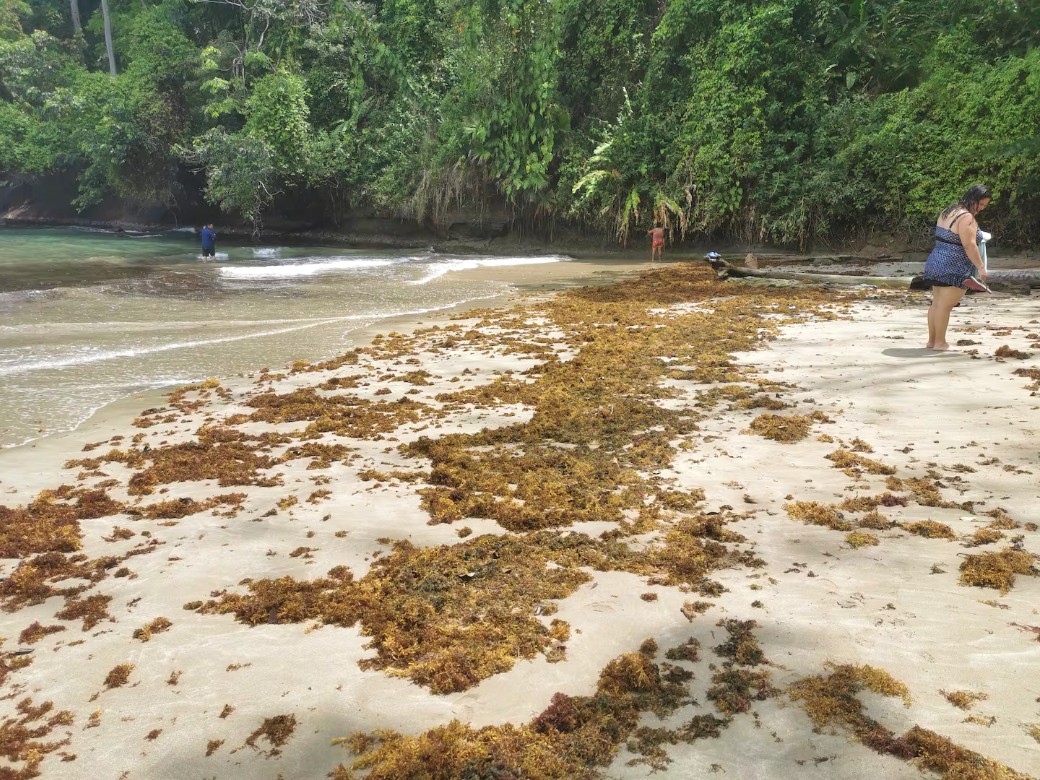
The Mexican Caribbean is facing an "environmental and economic emergency" today as record-breaking quantities of sargassum seaweed arrived on the shores of Cancun and Tulum weeks ahead of schedule.
Satellite data from the University of South Florida reveals a "colossal mass" of macroalgae in the Atlantic that has surged from 0.45 million tons to nearly 1.7 million tons in just thirty days. This "early surge" is being hailed as a "historic outlier," threatening the turquoise waters that are the "lifeblood" of the region's tourism industry.
In a bid to save the spring break season, the Mexican Navy (Semar) has launched a full-scale "coastal defense operation." Authorities have already deployed over 9,500 meters of containment barriers—with an additional 6,000 meters being rushed to high-traffic zones like Playa del Carmen. A fleet of 16 surface vessels, including specialized amphibious collection boats, is working 24/7 to scoop up the heavy mats before they reach the shallow water where they begin to decompose and release a pungent "rotten egg" smell.
The 2026 sargassum season is a "high-stakes" battle for Mexico's reputation, especially with the eyes of the world turning toward the country ahead of the World Cup. Local environmental secretary Samantha Álvarez is urging travelers "not to panic," emphasizing that sargassum is a "natural phenomenon" that can disappear as quickly as it arrives depending on wind patterns. However, for the leisure traveler who saved all year for a beach escape, the "brown tide" represents a significant "logistical and aromatic" challenge.
Innovative resorts are attempting to turn this "nuisance" into a "sustainable opportunity." At properties like El Dorado Royale, collected seaweed is being diverted to "climate-tech firms" for conversion into biochar-enriched compost and even "eco-friendly bricks" for construction. This "circular-economy" approach aims to mitigate the "environmental damage" while providing local farmers with high-quality fertilizers. For the 2026 eco-conscious traveler, staying at a resort with a "proactive seaweed strategy" is becoming a new "booking priority."
Travelers are being advised to utilize "real-time monitoring networks" to plan their daily activities. Because ocean currents vary, some beaches—such as the west-facing shores of Cozumel—often remain "perfectly pristine" even when the mainland is overwhelmed. The "traffic-light" updates provided by local agencies allow visitors to pivot to "cenotes or Mayan ruins" on days when the sargassum is particularly heavy. This "flexibility" is the new "essential gear" for anyone visiting the Yucatan Peninsula this month.
As of today, the Mexican Navy is treating the seaweed removal as a "national security priority," recognizing that any delay could result in a "massive economic loss" for the millions of families supported by tourism. The message for the global explorer is that while the "Great Atlantic Belt" of seaweed is a formidable opponent, the "Mexican response" has never been more "coordinated and technological." The "beach experience" may be different this year, but the "resilience" of the destination remains unchanged.