Sicily’s Etna Wineries: Tradition, Innovation and Hospitality on Europe’s Most Active Volcano
By Massimo Terracina
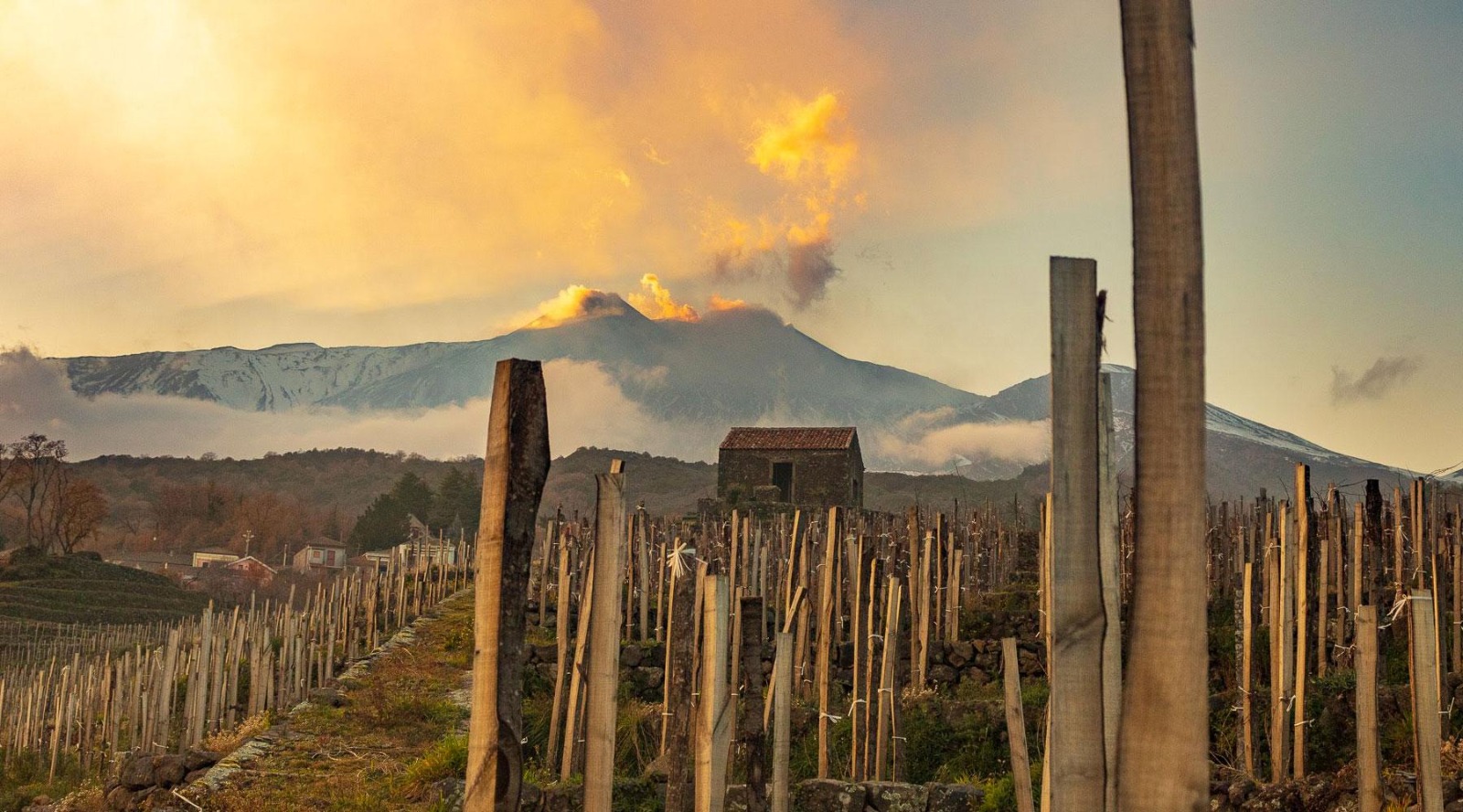
They call it “heroic viticolture”, and it is exactly that. If you visit those wonderful areas, you’ll find it out.
In recent decades, the true turning point for Mount Etna, affectionately known by locals, in the feminine form, as “A’ Muntagna” has been driven by its wineries.
Today, this extraordinary volcanic landscape has become a vibrant laboratory of ideas, where ancient agricultural traditions meet cutting-edge innovation, producing wines of remarkable quality that are celebrated worldwide.
And overall, with exquisite hospitality, excellent food (there are also Michelein starred restaurants), uou can rely on the capable caring surveillance of the Consorzio Etna DOC wine association!
The “Contrade” of Etna: a wine geography shaped by fire and altitude
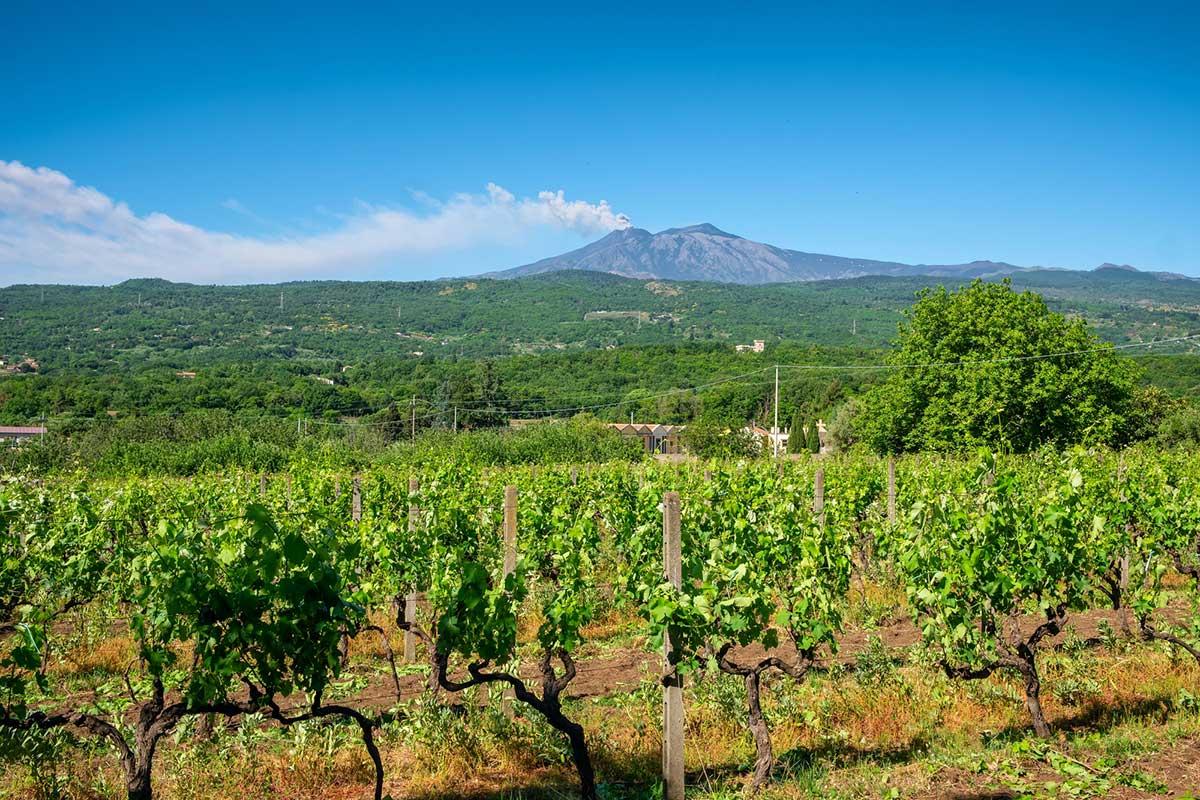
On Mount Etna, the concept of contrada (something similar to district) lies at the very heart of the wine and agricultural system. Far more than a simple geographical division, each contrada represents a distinct identity, shaped by specific lava flows, unique mineral compositions, altitudes and exposures.
Within the Etna DOC (controlled denomination of origins) regulations, the name of a contrada may appear on labels marked with the letter “C” an indication comparable to the concept of cru. This designation highlights the precise origin of the grapes and has become increasingly central in communicating the quality and complexity of Etna wines. It allows wine lovers to interpret the territory with remarkable precision.
The North Slope: Elegance, Finesse and Longevity
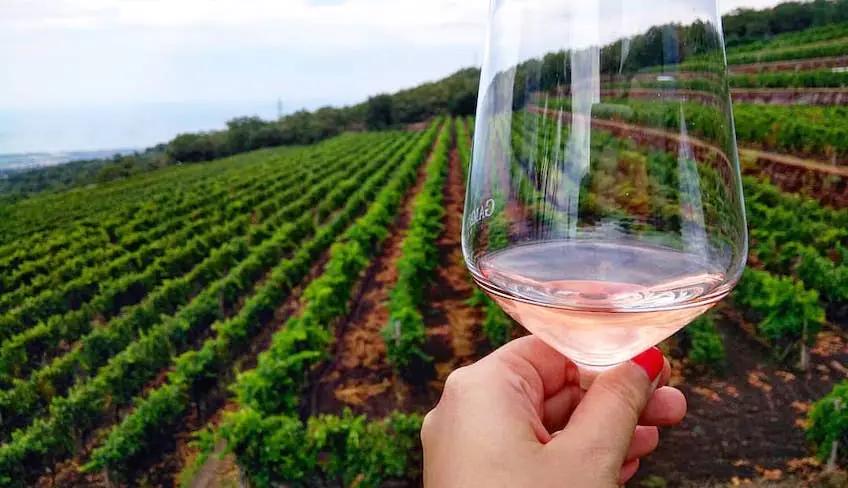
Stretching between Randazzo and Castiglione di Sicilia, the northern slope is widely regarded as the most prestigious area for red wines.
Here, vineyards sit at elevations ranging from 600 to 1,000 meters, benefiting from significant temperature variations between day and night. Ancient, sandy volcanic soils with excellent drainage host old vines, often ungrafted.
It is in this environment that Nerello Mascalese reaches its most refined expression, producing wines of elegance, fine tannins, vibrant acidity and exceptional aging potential. Contrade labeled with “C” in this area are particularly sought after for their ability to express subtle, distinctive nuances.
The East Slope: Precision and Mineral Tension
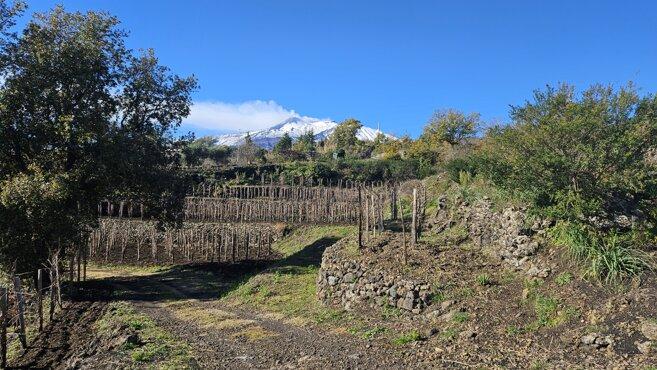
Facing the Ionian Sea and centered around Milo, the eastern slope is the kingdom of white wines.
Here, higher rainfall and maritime influence combine with relatively younger, mineral-rich soils at medium to high altitudes. The dominant grape variety is Carricante, which gives rise to wines defined by tension, salinity and longevity.
In this area, the “C” designation plays a key role in identifying micro-zones where freshness and minerality vary significantly.
The South-East Slope: Balance and Approachability
Between Zafferana Etnea and Santa Venerina lies a historically important and more accessible area.
Vineyards here enjoy greater sun exposure and are rooted in more recent lava soils, often at varied altitudes and with younger plantings. As a result, the wines tend to be more immediate and generous: reds are fruit-driven and softer, while whites are broader and less austere.
Contrade marked with “C” help identify cooler pockets that retain freshness, particularly in warmer vintages.
The South-West Slope: Structure and Power
Though smaller in size, the south-western slope, between Biancavilla and Adrano, is a fascinating area.
With a warmer, drier climate and deeper volcanic soils less influenced by the sea, this zone produces more limited quantities of wines with greater structure and ripeness. Reds here are fuller-bodied, more intense and expressive, with a distinctly солнеlit character.
The “C” designation helps distinguish higher, cooler parcels from those that are warmer and more concentrated.
The Meaning of “C”: Identity and Precision
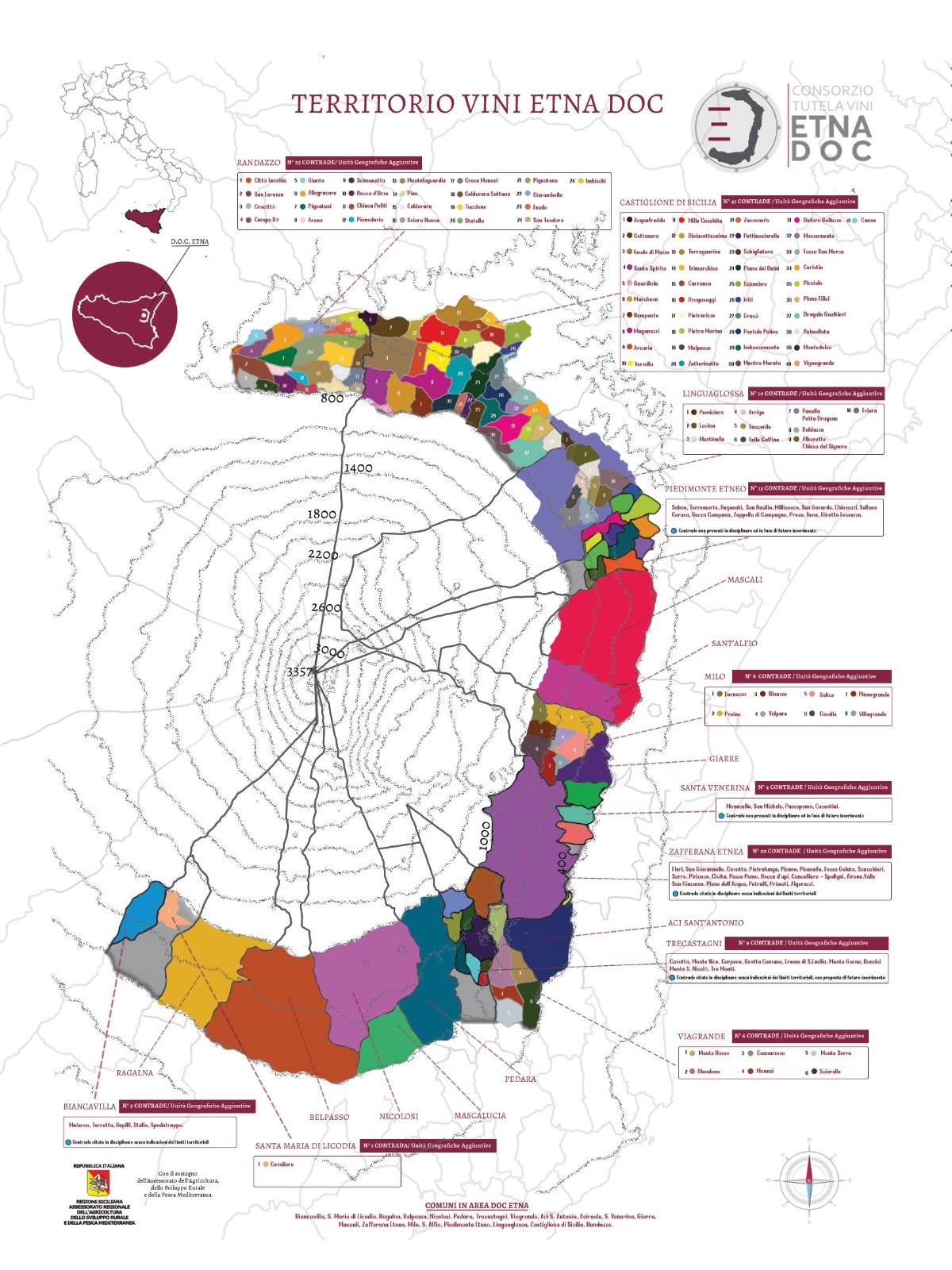
What does the “C” designation truly represent? Today, it is one of the most important tools for understanding Etna wines. From an agricultural perspective, it enhances the value of historic vineyards and micro-zones, encouraging targeted cultivation practices while preserving biodiversity and tradition.
It also allows for parcel-by-parcel vinification, highlighting differences in soil and altitude, and offering wines that are increasingly transparent and expressive of their origin.
In a fragmented and complex territory like Etna, the contrada is not merely a place name—it is a precise narrative of land, climate and human craftsmanship.
A Destination to Experience
Thanks to this detailed, place-driven approach, Etna wines are now among the most distinctive and recognizable on the international stage.
And when visiting the wineries around Mount Etna, where, remarkably, you can even ski in winter, don’t miss the chance to embark on a trek the summit of the volcano.
It’s an experience that truly rewards every step.