O’Leary Foretells Bankruptcy for Wizz Air and airBaltic by Late 2026
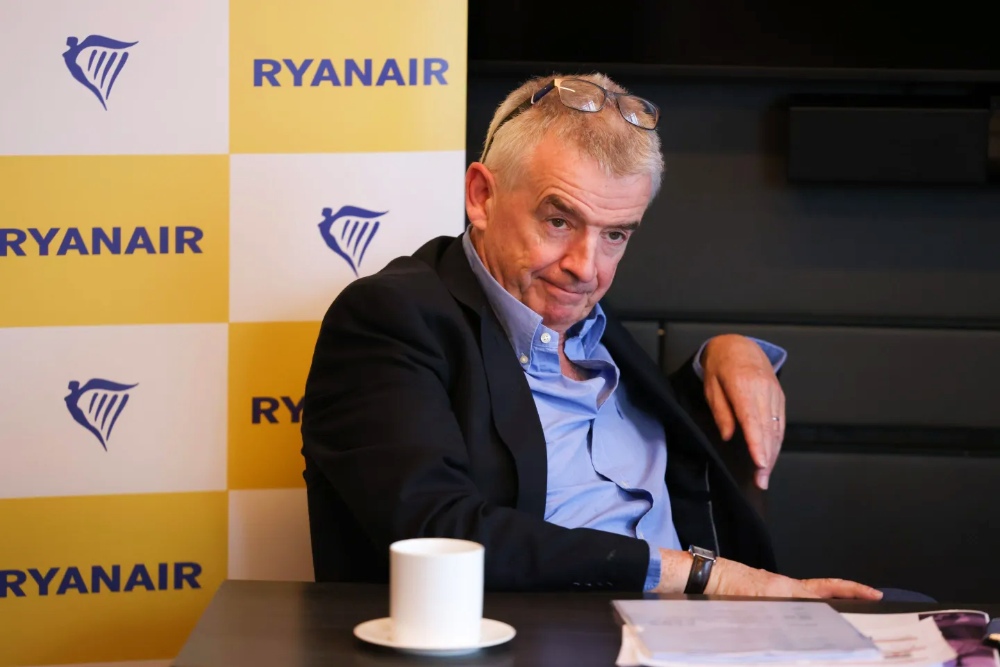
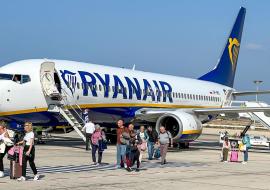
In a characteristic display of calculated aggression, Ryanair CEO Michael O’Leary has predicted a "winter of reckoning" for the European aviation sector.
Speaking with the Italian daily Il Sole 24 Ore this week, the controversial executive claimed that the current jet fuel crisis, exacerbated by the escalating U.S.-Iran conflict, will drive several competitors into insolvency before the end of the year. O’Leary specifically identified Wizz Air and airBaltic as the most vulnerable players, suggesting they may lack the liquidity to survive a prolonged period of $150-per-barrel oil.
O’Leary revealed that Ryanair faced a staggering $50 million fuel surcharge in April 2026 alone. Despite this, he remained defiant, asserting that his airline’s massive scale and hedging strategy would allow it to capitalize on the failures of its rivals. "The disappearance of less efficient competitors is ultimately a positive development for our business and market consolidation," O’Leary stated, signaling that the low-cost carrier (LCC) landscape is entering a period of brutal natural selection.
Wizz Air Fires Back: "Factually Baseless"
The response from Budapest was swift and sharp. Wizz Air leadership dismissed O’Leary’s comments as "entirely false and unfounded," accusing the Ryanair chief of using geopolitical instability to spread market misinformation. To reassure investors and the public, the Hungarian carrier highlighted three critical pillars of its operational resilience:
Fleet Modernization: 75% of its aircraft now belong to the A320neo family, providing a significant structural advantage in fuel efficiency over older fleets.
Cash Reserves: The company maintains that its aircraft acquisition plan is fully funded for the next 18 months.
Risk Mitigation: Wizz Air claims to have one of the industry's most robust hedging strategies, protecting its bottom line from the extreme volatility currently seen in the Middle East.
airBaltic Under the Microscope
While Wizz Air projects confidence, airBaltic is facing a more precarious financial reality that lends weight to market concerns. The Latvian parliament recently approved a €30 million emergency loan to keep the carrier afloat through the summer, with a strict repayment deadline of August 31, 2026. This tight liquidity position has caught the attention of global rating agencies, further complicating the airline's path to prosperity.
S&P Global recently downgraded airBaltic’s credit rating from ‘B-’ to ‘CCC+’, citing a high risk of default if regional conditions do not drastically improve. The airline’s survival now hinges on a successful innovation of its cost structure and a potential decrease in fuel prices, which currently show no signs of retreating. Analysts warn that for smaller flag carriers, the margin for error has effectively vanished in the second half of 2026.
The Future of European Airspace
As the industry moves toward the winter season, the stakes for global mobility remain high. A reduction in competition could lead to higher airfares and decreased connectivity for secondary European cities. For travelers, the message is clear: the hospitality economy of the skies is being rewritten by the price of crude.
Whether O’Leary’s predictions are a visionary warning or a tactical distraction remains to be seen, but the competitiveness of the European sky is undoubtedly at its most fragile point in decades.