Airline Recovery Following U.S. Ground Stop Proves Uneven across Major Carriers
JetBlue and American Airlines Logged the Highest Cancellation Rates Between November 13 and 16, Fueling Labor Union Criticism and Renewed Scrutiny Over Operational Resilience
The nationwide ground stop ordered by the Federal Aviation Administration (FAA) on November 13 served as the primary catalyst behind more than 19,000 flight cancellations across the United States between that date and November 16, according to aviation analytics firm Cirium.
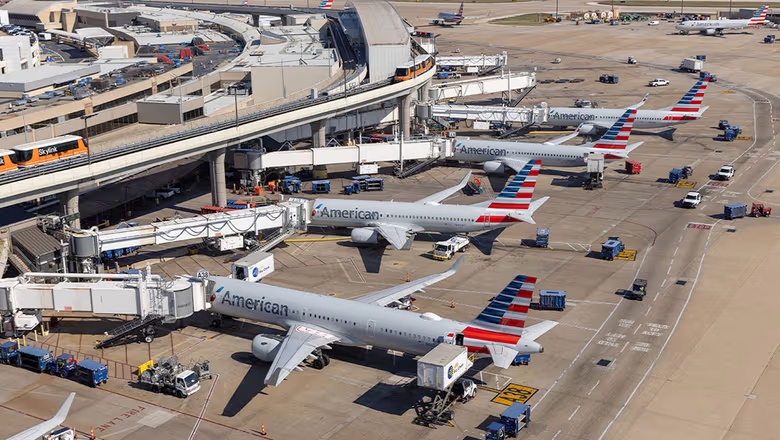
Yet while the federal shutdown affected every domestic carrier simultaneously, the pace of operational recovery varied sharply across the industry, with JetBlue and American Airlines recording the highest shares of scrubbed departures during the four-day window—canceling 32.6% and 23.2% of their U.S. flights, respectively.
Among the remaining top six U.S. airlines, Delta Air Lines canceled 17.7% of its scheduled departures between November 13 and 16, followed closely by United Airlines at 17%, Southwest Airlines at 16.3%, and Alaska Airlines at 12.2%. Those figures encompass all flights operated under each carrier's brand, including regional routes flown by third-party partners such as SkyWest.
The operational lag at JetBlue and American became particularly pronounced on November 15, by which time rival legacy carriers had largely restored normal schedules. According to flight tracking records from FlightAware, American canceled 24% of its mainline flights that day and JetBlue scrubbed 29% of its schedule, whereas none of the other major carriers exceeded 5% on their mainline operations—even though regional affiliates like Delta's Endeavor Air hit 13%, and budget carriers including Frontier, Allegiant, Sun Country, and Breeze outperformed their larger competitors throughout the recovery.
Corporate explanations for the lopsided performance underscored a stark contrast in crisis communications. JetBlue attributed its elevated cancellations to the heavy concentration of its route network along the congested East Coast and the timing of the FAA order, which began just before 4:00 p.m. Eastern Time and lasted until 8:15 p.m.—a window when flight crews were already accumulating duty hours and uncertainty over hub reopenings complicated next-day aircraft repositioning.
Spokesman Derek Dombrowski noted that the carrier adopted a conservative strategy of proactive cancellations to help travelers rebook, pointing out that 92% of its scrubbed flights were canceled at least four hours prior to departure, the lowest rate of last-minute cancellations among major U.S. airlines.
By contrast, American Airlines declined to comment on its recovery performance, a silence that drew sharp rebuke from its pilots' union, which remains frustrated by the carrier's sluggish rebound following Winter Storm Fern in January, when widespread cancellations dragged on two days longer than at competing carriers amid operational bottlenecks at its Charlotte and Dallas hubs.
Allied Pilots Association spokesman Dennis Tajer argued that the nationwide shutdown across the networks of American, United, and Delta provided one of the purest side-by-side stress tests of airline management, declaring that American's leadership "failed" the test and that pilots and labor groups are exhausted by repeated operational underperformance.
The episode has also reignited industry debate over the role of crew-scheduling technology during large-scale network disruptions. Aviation consultant Bob Mann of R.W. Mann and Co. explained that multiple bottlenecks complicate network restarts, particularly when flight and cabin crews cannot reach scheduling desks to report their location and legal availability—a vulnerability that prompted Southwest to prioritize modernizing its crew-management platforms following its 10-day holiday meltdown in December 2022.
While no specific technical failure has been linked to the slower rebounds at JetBlue or American, Deutsche Bank airline analyst Michael Linenberg noted that Delta and United rank among the carriers that have invested most heavily in upgrading their core operational technology in recent years.