Santorini Implements Strict Passenger Caps to Combat Severe Port Gridlock
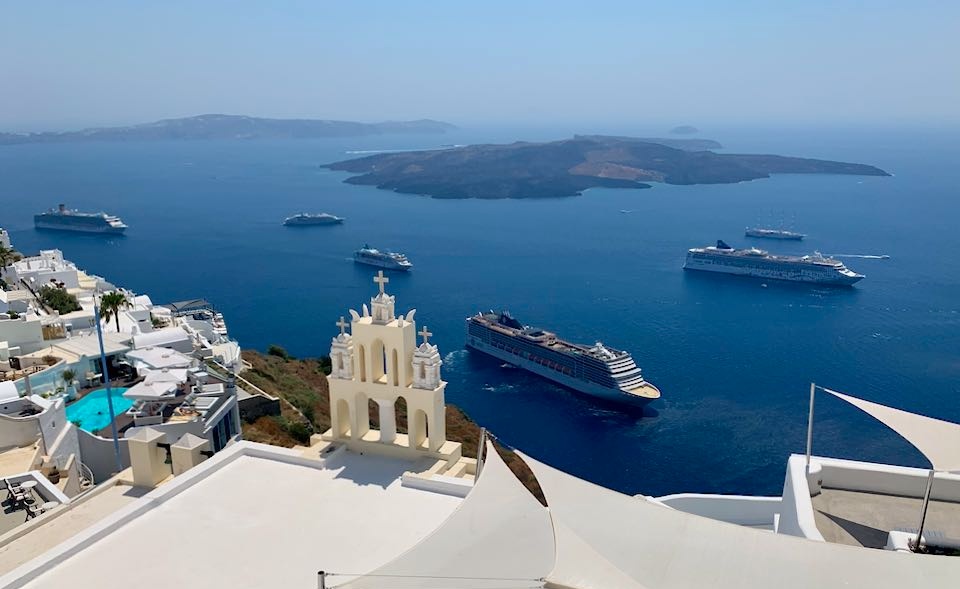
Tensions between local municipal governments and international maritime networks have reached a critical baseline on the iconic Greek island of Santorini as peak summer crowds strain local infrastructure. Regional authorities have finalized a hard daily cap of 8,000 cruise visitors, introducing a much stricter calculation matrix to manage overcrowding.
Under the updated regulatory framework, port administrators now calculate vessel capacity based on 100 percent maximum berth occupancy, replacing the previous 80 percent baseline assumption. This technical adjustments means a ship carrying 3,000 passengers now consumes a full 3,000 slots of the daily visitor limit, effectively limiting the number of mega-ships permitted to anchor.
Alongside the strict capacity cap, a tiered cruise passenger levy has been implemented across the region to generate localized infrastructure revenue. Throughout the peak summer travel window, passengers stepping ashore at Mykonos and Santorini face a premium 20-euro fee, while secondary Greek ports maintain a baseline charge of five euros.
The stricter enforcement has driven immediate behavioral shifts among operators, with the island's official Berth Allocation System recording an 18 percent drop in scheduled cruise arrivals. Total ship calls are projected to decrease significantly, dropping from 728 vessels down to 595 over the current summer season.
However, operational friction persists on the ground following a new municipal directive that routes up to 70 percent of arriving cruise passengers through Fira Bay instead of the traditional Athinios Port. While intended to protect coastal highway networks, the sudden logistical diversion threatens to generate massive, prolonged queues at the central cable car terminal.
The island's mayor has publicly insisted that all revenue generated from the new passenger levy must remain under the direct control of the local municipal government. Local authorities plan to allocate these funds toward critical infrastructure modernizations, aiming to balance the economic realities of maritime tourism with long-term ecological sustainability.