Jamaica Sets New Course for Tourism Wealth Retention
The Caribbean Travel Marketplace 2026, underway in Antigua and Barbuda, has served as a pivotal stage for redefining the region's economic future. Amidst the bustling exchange of industry leaders and stakeholders, the focus has shifted from mere arrival numbers to the sustainable integration of local industries within the tourism value chain.
As the Caribbean navigates a post-hurricane recovery landscape, the dialogue has intensified around building a resilient, self-sufficient ecosystem that prioritizes the economic well-being of its people.
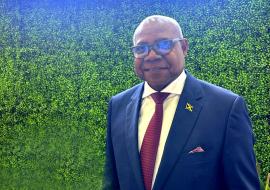
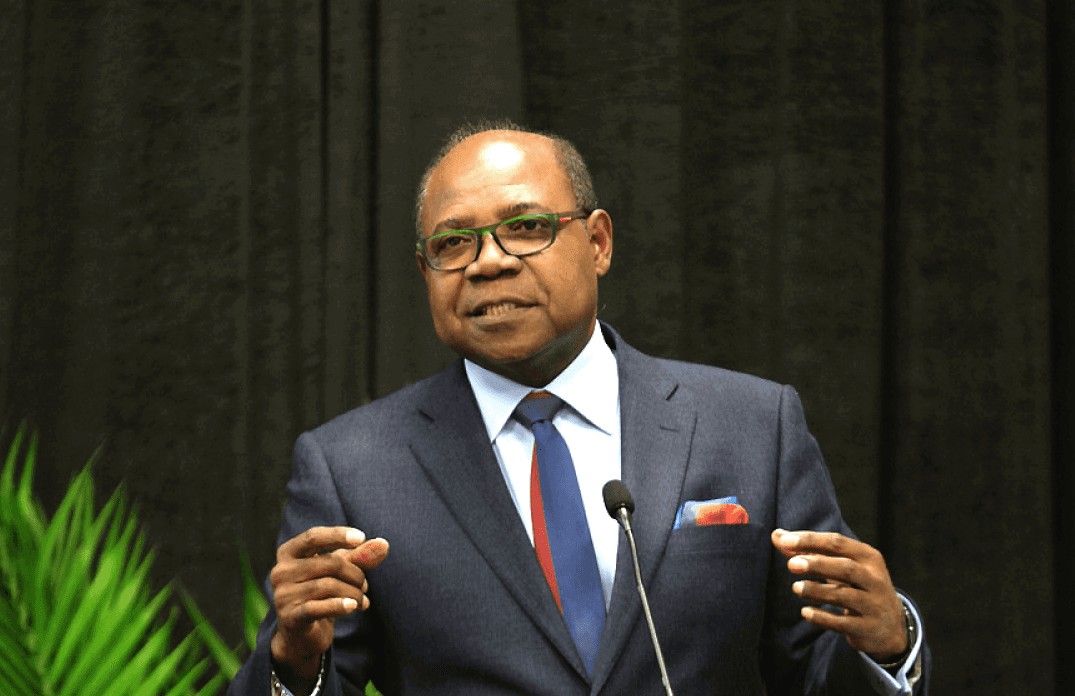
In this exclusive interview, Edmund Bartlett, Jamaica’s Tourism Minister, outlines his vision for a "professionalized" industry that bridges the gap between high-end demand and local supply capabilities.
Now chairing the Supply Side Subcommittee of the Caribbean Tourism Organization (CTO), Bartlett discusses the strategic shift toward wealth retention, the impact of Spanish investment, and the impressive economic recovery of Jamaica.
We are seeing the rise of Global Gastronomy Day. Do you believe we should create specific activities around this event, perhaps bringing world-renowned chefs together for major international cook-offs?
You know, you have Global Gastronomy Day. We have to create an activation around that to bring chefs from all over the world for major cook-outs and cook-offs.
There are already various international groups hosting high-level gastronomy conferences and seminars. The UN, for instance, has organized gastronomy summits in locations ranging from Malaysia and Spain—specifically the Basque Country and Seville—to Argentina and Peru.
So, the UN had these gastronomy summits. They moved them all over the world. We have sometimes in Malaysia, sometimes we have in different parts of Spain, particularly up in the Basque Culinary Country, and Seville, and in Argentina and Peru. Now, Peru is going to have one, I think, later, I'm sure next year or something like that. But Peru is a big gastronomy center.
Regarding your work with the Caribbean Tourism Organization (CTO), could you elaborate on your new role and what it entails?
Well, I'm now chairing the Supply Side Subcommittee. This is a very important dimension for tourism development in the country. Because normally, or traditionally, we've been preoccupied with bringing visitors to the country.
We talk about how many visitors come and what the revenue might be. But we have not spent enough time talking about how much of that revenue generated in the Caribbean actually stays in the Caribbean for the wealth and well-being of the people. So in the broad sense, it creates jobs.
In the past, those jobs have often been characterized as low-end or poorly compensated. How is the committee addressing the need for professionalization and better wages?
Sometimes it's low-end because there's skill levels that are required. They are sometimes poorly compensated, not because the industry is unmindful of the workers, but because of how skill levels are measured. We have not, as a region, created a highly sophisticated and professionalized industry. The workers are competent, but they are not certified.
As a result, the issue of classification and being able to remunerate according to that classification is missing. The time has come to build capacity within the Caribbean to extract the wealth of tourism through manufacturing, agriculture, and the creative industries. These services drive wealth that stays within your space if the providers are local people.
How will public policy facilitate this shift without becoming overly restrictive for the private sector?
This committee is about beginning that dialogue and looking at how we could have public policies to encourage local capacity building. We are not mindful of making laws which force action, but which encourage the development of facilities. The laws will be about facilitation and not about coercion. We want to dispel the notion of tourism being an extractive industry and instead operate such that we are extracting wealth for the people of the region.
A decade ago, the CTO had a smaller division with a similar focus. How has the organization's mandate evolved since then?
CTO has expanded and its membership has grown, but the mandate has got to change. In the past, it focused more on marketing to bring more tourists. Now, the focus is: how do you convert that demand into supply capabilities for our people? We want them to become active entrepreneurs and participants in wealth creation rather than just laborers.
When can we expect Jamaica to host the Marketplace again?
Well, we're working on it. I can't tell you at this minute, but the director and I are working on getting Jamaica to host as quickly as possible. We are looking at an appropriate time. As you know, this moves around from island to island, and Jamaica's turn is coming up.
Turning to the domestic front, what is the current economic outlook for Jamaica, especially following recent weather events?
Jamaica's economy has really grown and done well. Prior to the hurricane, we had reduced our debt-to-GDP ratio down to 62%. Unemployment was down to 3%, and inflation was running at 4% to 4.5%. We were receiving BB+ and BB- credit ratings.
While the hurricane has had an impact, our economic stability allowed for a strong response from multilateral partners. In just three weeks, we secured nearly $7 billion in support for the rebuilding exercise.
Spanish hoteliers have a very distinct business model—often all-inclusive and high quality at competitive prices. How do you view the impact of Spanish investment on the Jamaican tourism product?
The Spanish investment in Jamaica has made a big difference in our general global appeal. It created the critical mass we needed to get airlines and big operators to pay attention to us. It also created a competitive price point, making Jamaica a destination not just for the discerning visitor, but for those where affordability is a concern.