Tonino Lamborghini: A Man of Ideas
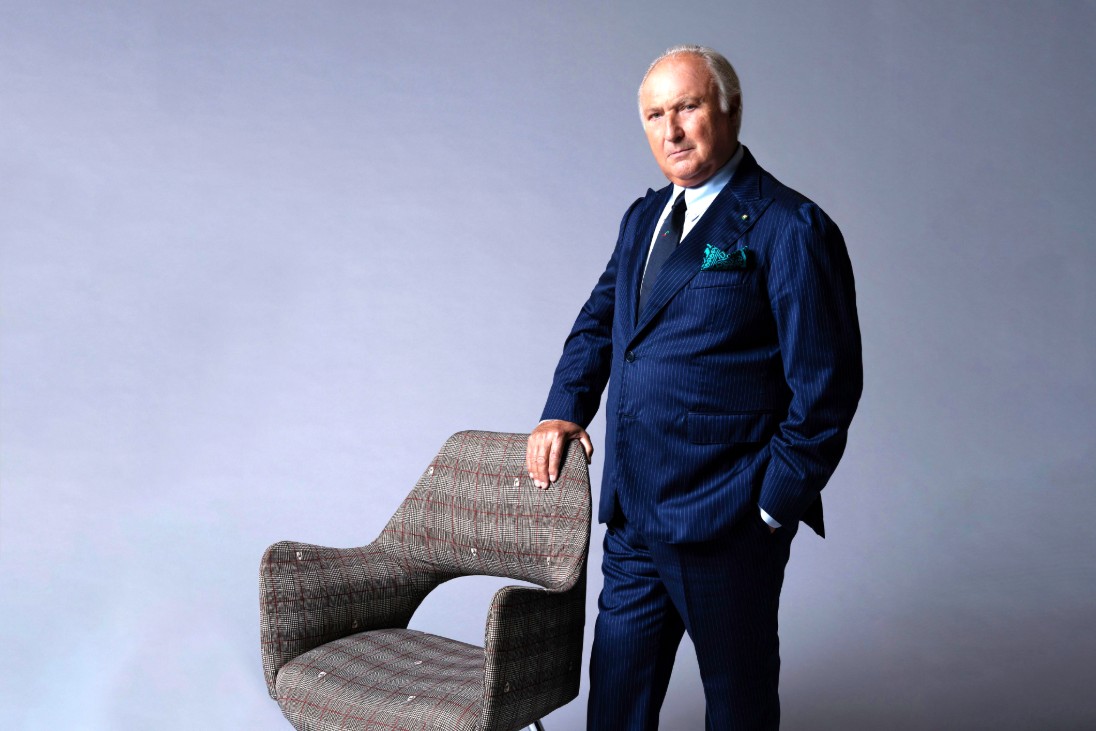
For a member of a family known worldwide for its attractive and powerful history, venturing into other activities and taking the Tonino Lamborghini name to new heights has been a way of life that is now recognized globally
At just 21 years old, before he had even finished college, Tonino Lamborghini entered the business realm. With a surname that speaks for itself, his father Ferruccio entrusted him with the management of the family businesses and set him a simple rule: manage alone, evaluate results at the end of the year, and accept the consequences. That period was fraught with uncertainty and rapid learning, without a safety net.
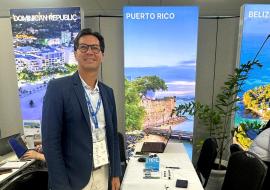
He confessed this to us during an enjoyable conversation at the International Tourism Fair, FITUR 2026, which was held over five days at IFEMA Madrid.
For years, he continued to run established businesses, but at the same time he began to feel the need to create something of his own, almost like a personal space within a legacy of enormous weight. When he consulted his parents, he received an answer that would mark him: he should do what he believed was right, without forgetting that he was inheriting historic companies linked to tractors, automobiles, boilers and air conditioning systems, sectors in which his family had been pioneers in Italy.
This duality between responsibility and freedom defined his path.
His first leap took him to watches and eyewear, then to perfume. Tonino Lamborghini insists that he does not consider himself a designer, but rather a man of ideas, driven by curiosity and the desire to try his hand at very different sectors. He acknowledges that each project involves real risks, because selling and producing different objects requires specific knowledge that cannot be acquired immediately. Each venture was a personal gamble, a challenge to himself.
When comparing his career with other major Italian brands, he points out a clear difference. Some companies build their identity around a single product throughout their history. He feels closer to the example of his father, who moved from tractors to heating, from air conditioning to water purification, even at a time when such advances did not seem necessary. He recalls that decades ago, water was cleaner, and yet his father invested in filtration and lime removal systems, anticipating future problems, problems that we have today. That ability to look ahead became an intangible legacy.
Following the same logic, he entered the world of wine, a sector he describes as complex and demanding, far from the romantic image of buying land and producing bottles. He emphasizes that
learning to make wine requires years of practice and in-depth knowledge. His career is not the result of improvisation: it has been a constant process of learning and adaptation.
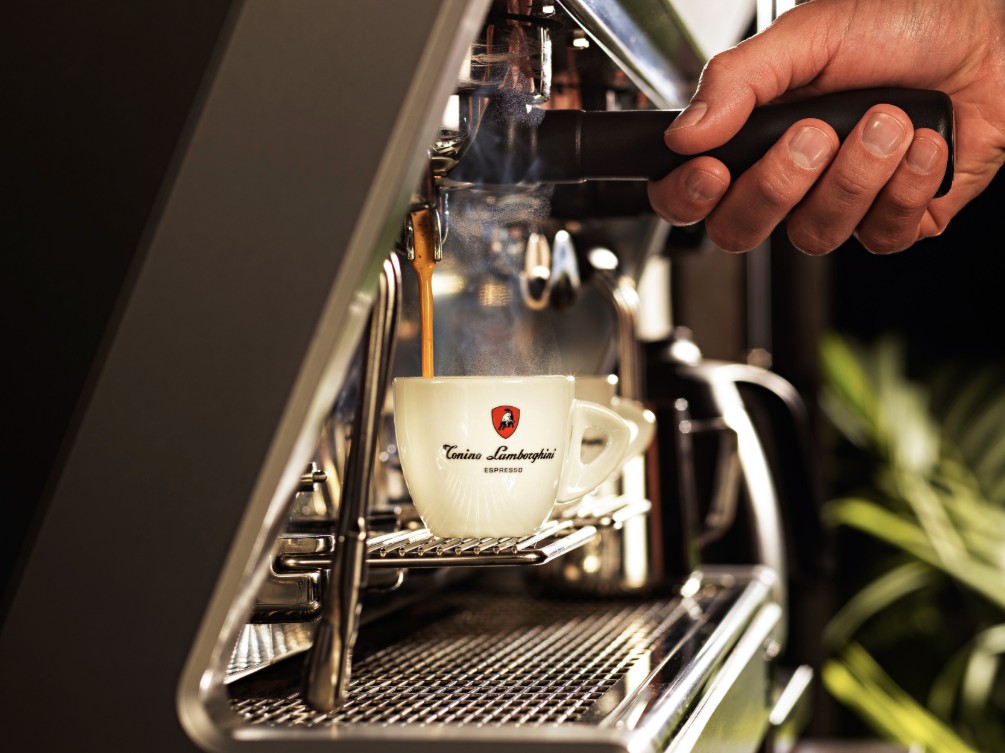
Over time, Tonino Lamborghini decided that his goal was not just to launch products, but to convey a complete lifestyle. Before entering the hotel and real estate development business, he found another powerful symbol of Italy in coffee. He identified espresso as a cultural emblem and acquired a small roaster, giving rise to Tonino Lamborghini coffee. The product's success and the brand's acceptance opened new doors and sparked the interest of partners and distant markets.
This journey led him to China, where 20 years ago he launched hotel projects in a context that was almost untouched by branded hotels. Faced with large international chains that guarantee standards, Lamborghini proposed something different: adding a lifestyle experience to quality.
One of the most significant examples emerged in Suzhou, where he transformed a 600-year-old abandoned library into a large boutique hotel by local standards. The project respected the original structure, columns, and gardens, reinterpreted with Lamborghini's aesthetic language. The result combined Chinese identity and Italian design, with a mostly Italian cuisine adapted to local tastes.

This experience gave rise to other projects in different regions of China. Tonino Lamborghini emphasizes that each area has its own culture, as different from each other as various European countries. For this reason, he insists on the need to interpret and respect each territory, without imposing a single model. Each Tonino Lamborghini hotel seeks to dialogue with its surroundings, not overshadow them.
When he returns to the question of the brand's DNA, Tonino Lamborghini defines it as strong, recognizable, and consistent design. He recalls that at the age of 16 he was already designing the aesthetics of his family's tractors and that those models were very different from those of the competition. That imprint remains today in all his products, from watches and eyewear to buildings, residences and interiors, characterized by bold lines and clear aesthetic decisions.
The conversation drifts toward Lamborghini's historic cars of the family personal collection - carefully housed in the Ferruccio Lamborghini Museum in Funo di Argelato (BO), founded by Tonino and now an historical exhibition and event venue - such as the Espada and the Countach, which he uses as examples of a philosophy based on angular shapes, powerful sound, and personality. For him, these vehicles are more than works of engineering: they represent emotion and character, values that he tries to convey in all his projects since it’s all part of his heritage
Explaining how Tonino Lamborghini was born as a global concept, he states that the ambition is to bring something new to developing countries. He prefers markets where there is still room to grow
and contribute to local evolution, such as Latin America or Asia, rather than saturated contexts such as the United States. He mentions projects in Brazil, Chile, Peru, and other regions, where he finds greater satisfaction in introducing a comprehensive lifestyle concept for the first time.
He clarifies that he does not sell simple buildings. He offers a spirit. Anyone who enters a Tonino Lamborghini residence symbolically enters his home, because everything, from the floor to the furniture and interior details, reflects his personal design. He rejects agreements that are limited to placing a signature without total creative control. For him, the model only works with complete involvement.
The alliance with the Archipelago International hotel group arises, he explains, from a personal and professional understanding. It is an Asian brand, which brings a different sensibility to that of Europe or the United States. Tonino Lamborghini reflects on the influence of Asian philosophy and acknowledges a deep personal affinity with that region. He says he has always felt at home in places like Thailand and Bali and that this emotional connection influences the way he conceives projects.
In his view, the challenge is to combine respect for local culture, Italian innovation, and the Tonino Lamborghini identity. It is not just words, but a concrete experience that materializes in each space. Design, quality, atmosphere, and prestige appear as key concepts. Tonino, lastly, clarifies that prestige does not depend exclusively on price. He recalls examples from the automotive sector to explain that some affordable products have conveyed status and personality, while other more expensive ones have only reflected purchasing power. Prestige, he argues, responds to a deeper perception.
When addressing the Dominican Republic, he acknowledges that the challenge is greater. Unlike countries with very strong cultural identities, such as China or Dubai, the Dominican image is mainly associated with the sea and beaches. Interpreting the Tonino Lamborghini brand in this context requires care so as not to distort the concept. Even so, he confesses that he is attracted to complex challenges and the possibility of experimentation.